

How To Install Racing Harness
Seatbelts. Yup, y'all gotta apply them. They are required past law on the street, and if you're going to the race runway you non only need to article of clothing a seatbelt, you need to article of clothing a minimum of a 5-point harness. This is all for good for a number of reasons. Outset, information technology will save your life, no question. Second, the five-point harness holds you snug in the seat so you tin apply your appendages to do more important things like steer, heel-toe downshift, and do victory donuts.
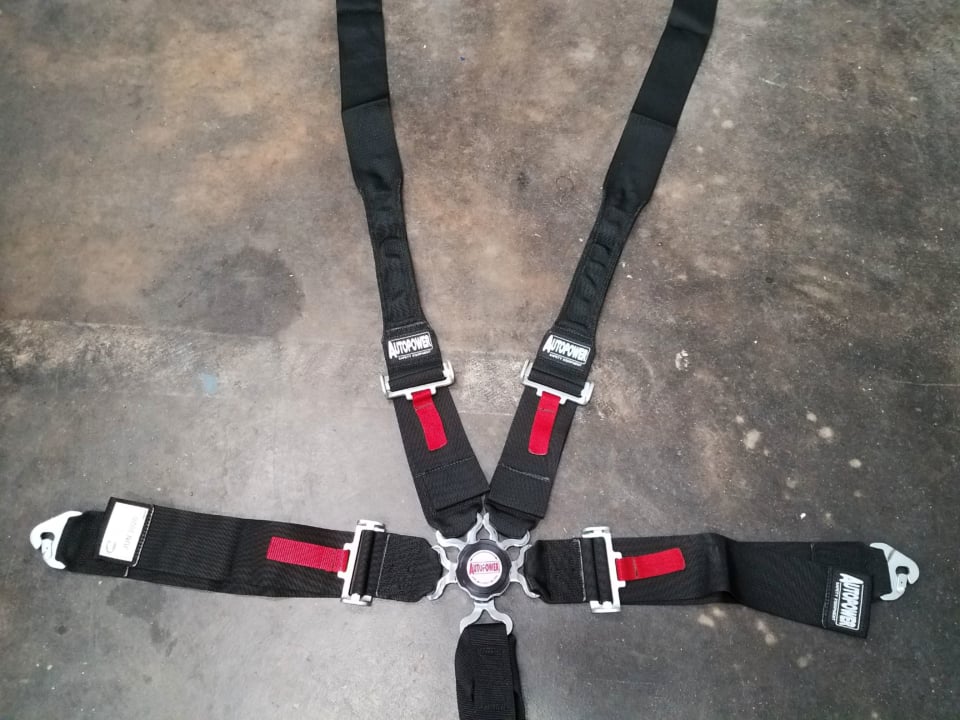
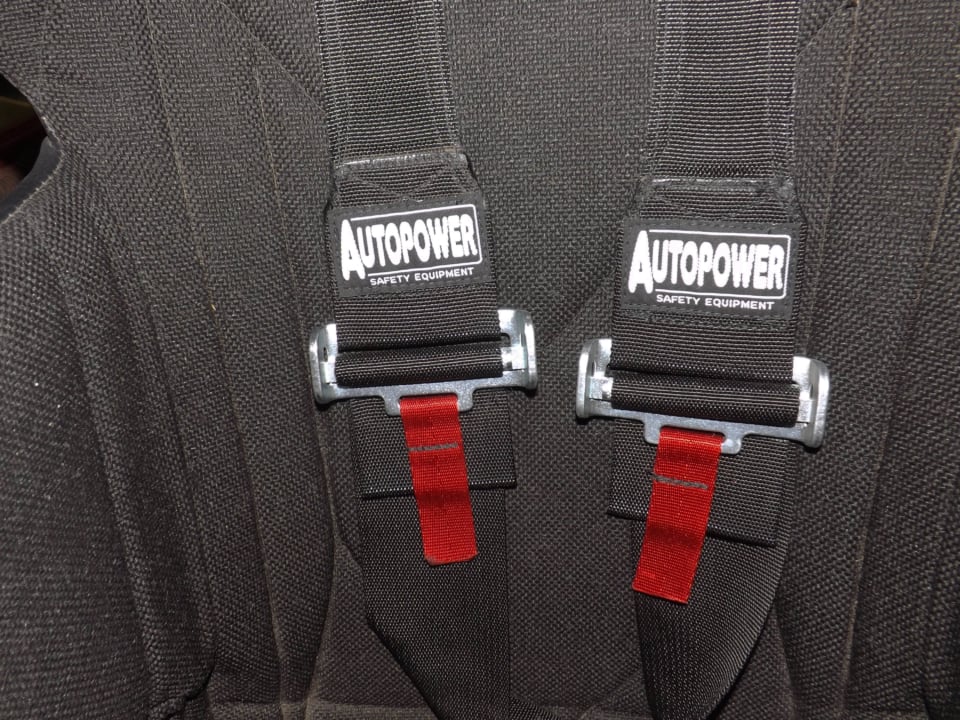
This prepare of belts is a 5-bespeak, 3-inch-wide webbing, racing harnesses from Autopower. The buckle is a cam lock way. The shoulder harnesses are wrap around style narrowed for HANS fitment. The lap belt is a pull down style for tightening. The lap and sub belts are affixed to the car by snap in/heart-bolt connection.
Even for amateur weekend motorsports, where a 5-indicate harness isn't a requirement, the installation of a harness is a peachy idea as information technology increases your safety and allows you to drive faster. Whether you are putting a set in your street car/weekend autocross racer or a full-blown, dedicated track motorcar, in that location are a few things you need to consider about as you purchase and install the belts.
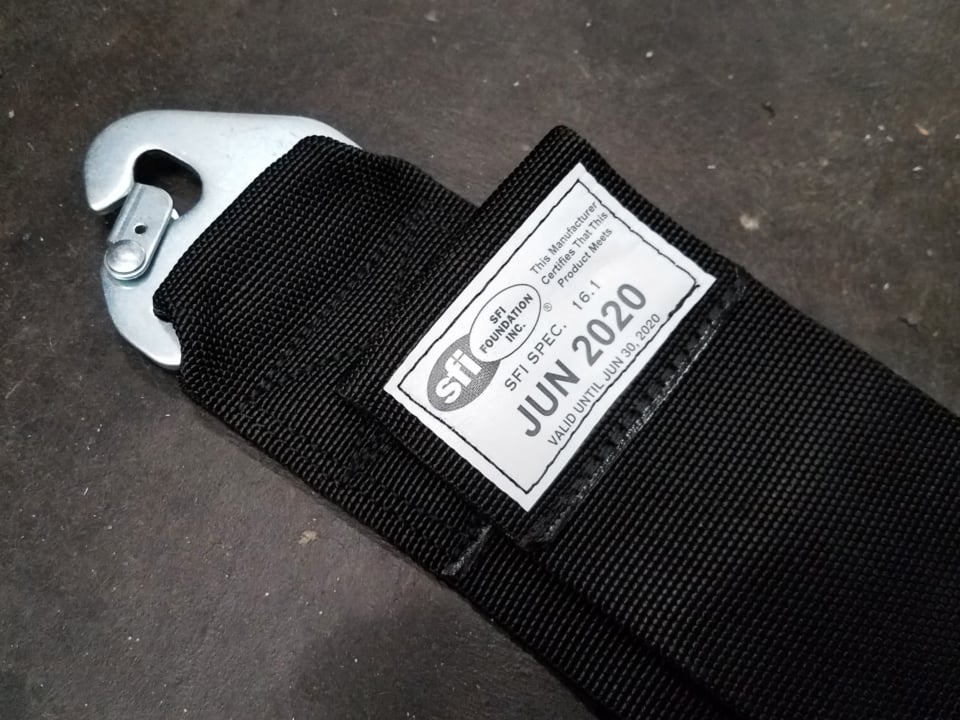
Don't bother buying a set of used harnesses from Craigslist because these things have an expiration engagement. Nigh sanctioning bodies take a ii year limit on harnesses. This SFI label indicates this belt is adept until 2022.
Harnesses aren't a terribly expensive upgrade to your auto, betwixt $lxx and $400 per set, with many options to choose from. The main choice differences are a latch/link buckle (where you take to hold five belts together simultaneously to adeptly latch the belt) versus a camlock style (which is much easier to fasten –especially when wearing a helmet, gloves, and HANS device). Both latch systems speedily disengage with a single touch of the buckle, a requirement in case a driver needs to leave a vehicle quickly. Yup, this usually means fire.
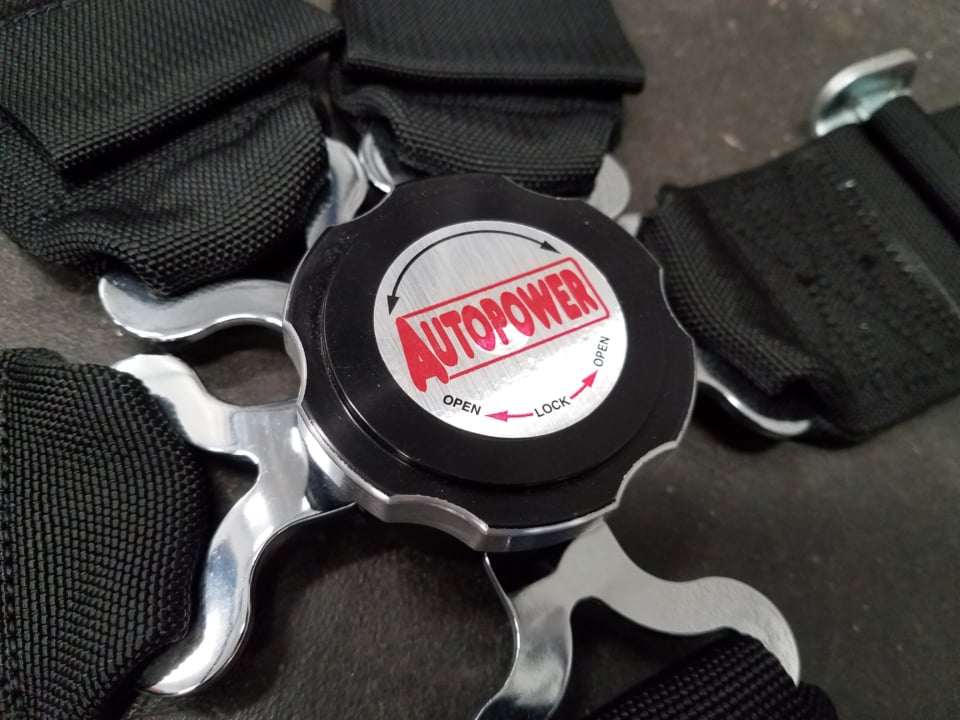
Here you can see a simple twist left or right on the camlock and all of the belts chop-chop disengage. Each belt (left shoulder, right shoulder, left lap, sub chugalug) all undo simultaneously from the camlock which is attached to the correct lap chugalug. The position of the camlock can exist placed on whatsoever of the belts, some people prefer it remain attached to the sub belt. The setup is completely adaptable.
Attaching these belts to your car takes some pre-planning and careful attending to the belt paths every bit they become over your torso and to their fixed betoken. The easiest style to install a set of harnesses is past using a snap-in system with Class 8 eye-bolts. 1 of the advantages of eye-bolts is the chugalug can rotate on the eye of the bolt and the right commodities volition thread straight into your vehicle's stock seatbelt anchor location, which by design is the strongest part of the automobile's interior.
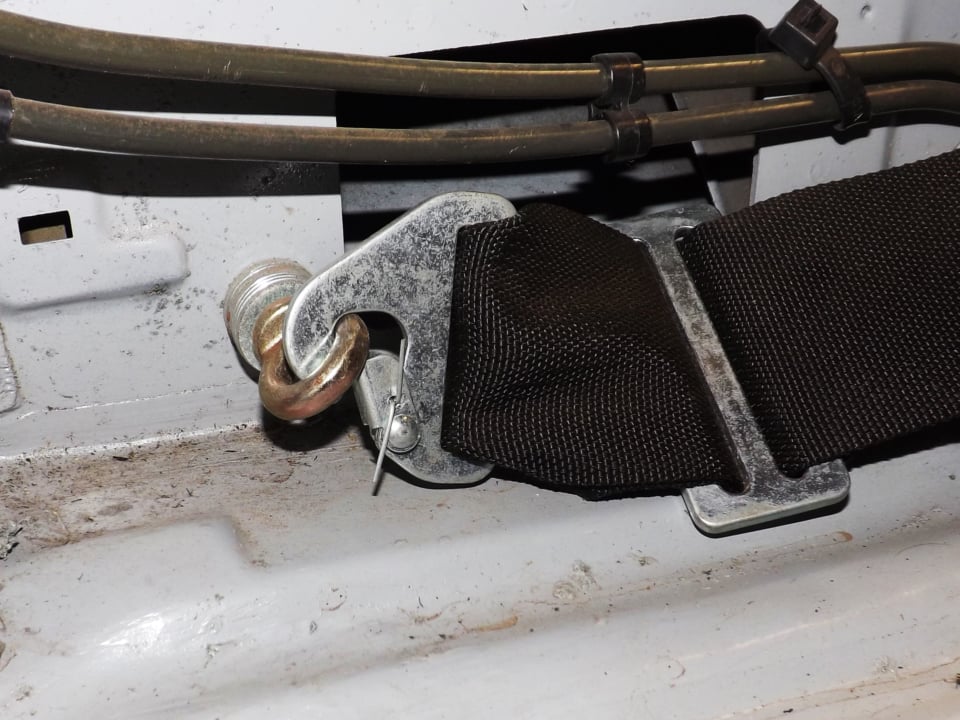
This snap-in belt is attached to the vehicle using the OEM seatbelt-bolt threads in the chassis' interior with a Form viii heart-bolt. Pay attention to the small cotter pin in the snap-in clasp to ensure the belt can't come off the heart-commodities. This is frequently overlooked (because these cotter pins generally don't come with your belt buy) and is a quick fail during tech inspection.
The sub-chugalug (the belt that goes right betwixt your legs) won't have a stock commodities hole that yous can utilize to mount information technology. This will require drilling through the floor pan to install an heart-bolt. This isn't a big deal for a racecar, just some folks don't like the idea of making Swiss cheese out of the floor pan of their brand new Mustang (you know, the Mustang the bank nonetheless owns). Regardless of your opinion of floor pan damage and resale value, it is crucial that you install the sub-belt considering it is the belt that ensures the unabridged belt system is properly located on your torso. Y'all desire the lap belts on your lap, not up in your stomach expanse. If you tighten your shoulder belts and y'all don't have a sub-belt installed, inherently your lap belt volition ride up and not be position correctly which means: injury to you. This is a bad thing.
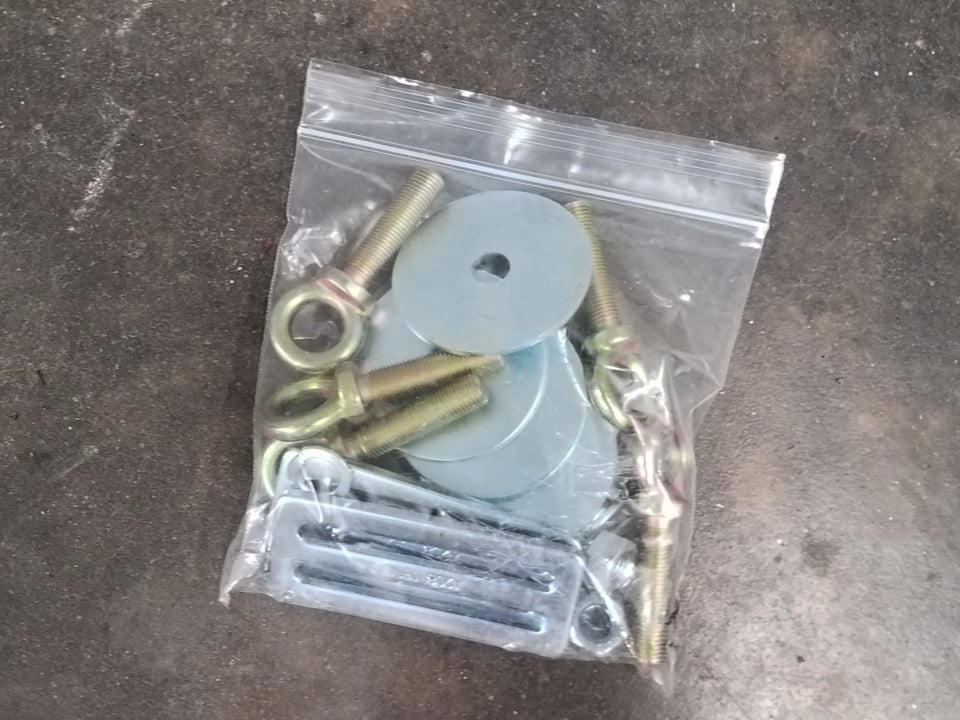
Most harness sets come with the required hardware to install the belts properly. In the bag you will see large fender washers, Grade viii heart-bolts and iii-bar adjusters.
If you have a roll muzzle, a roll bar, or a harness bar, you can simply thread your shoulder harnesses around the bar behind your driver seat and use the three-bar adjuster to get the belt to the correct length and snug. The important affair to remember is the correct threading of the webbing through the three-bar adjuster. There is a method to the madness on how to exercise this correctly.
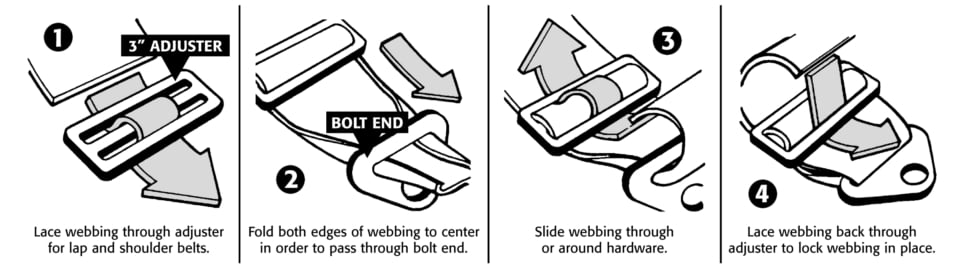
One of the nearly common, incorrect installations comes from not routing the belt webbing properly through the three-bar adjuster. The flim-flam is to remember to go back through a 3rd time to lock the belt in identify, just like the diagram above.
I spoke with Ken Myers, owner of I/O Port Racing Supplies, who sells harness systems daily to motorsports enthusiasts, and is a technical inspector for the National Car Sport Association (NASA). Ken mentioned a few things that right abroad fail a machine during a technical inspection. Cotter pins not placed in the snap-in systems, improper angle on shoulder harnesses (see why this is bad below), and non threading harnesses the correct way are mutual mistakes during installations.
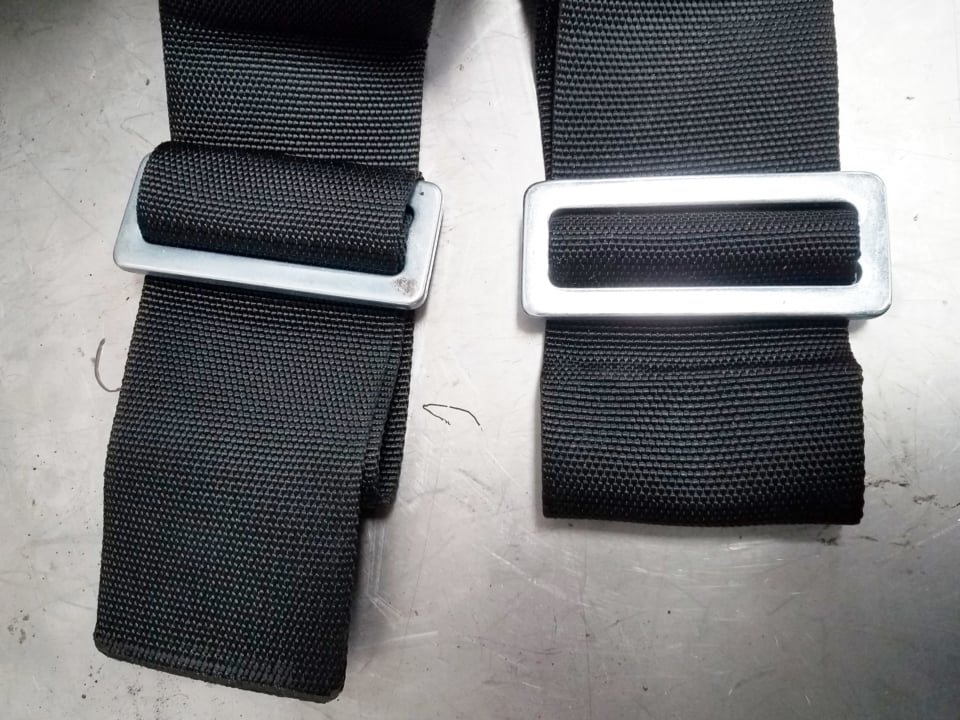
The shoulder harness on the left is correctly threaded (just like the diagram instructions earlier). The shoulder harness on the correct is incorrectly threaded. The dead giveaway is if you can see two of the bars of the iii-bar adjuster then information technology'due south wrong. If routed properly, you should simply see one bar.
It is crucial that the belt path from the attachment point in the vehicle (floor pan for lap belt or roll bar for shoulder harness) not exist hindered or redirected by the seat prior to going over your torso. The forces during an touch are immense and these iii-inch-wide belts are designed to help you withstand an touch. Nevertheless, if the belt is redirected by a seat, then as the chugalug straightens out during a crash it can break the seat and so create slack in the chugalug which means you move forward and your body runs into stuff — hard stuff — similar the steering wheel or windshield. Bad for your face up.
Co-ordinate to Rick White, co-possessor of Autopower Industries, a very critical item to installing whatever 5-indicate harness correctly is the angle of the shoulder harness behind the driver. "If the harness is likewise low (i.e. attached to the floor pan near the rear seat), in a collision the belts will compress the driver'south spine causing injury," he says. "Information technology is better to have the belts equally close to level every bit possible to the driver's shoulder height. This is properly done with a harness bar, a roll bar, or roll cage in combination with the seat height."
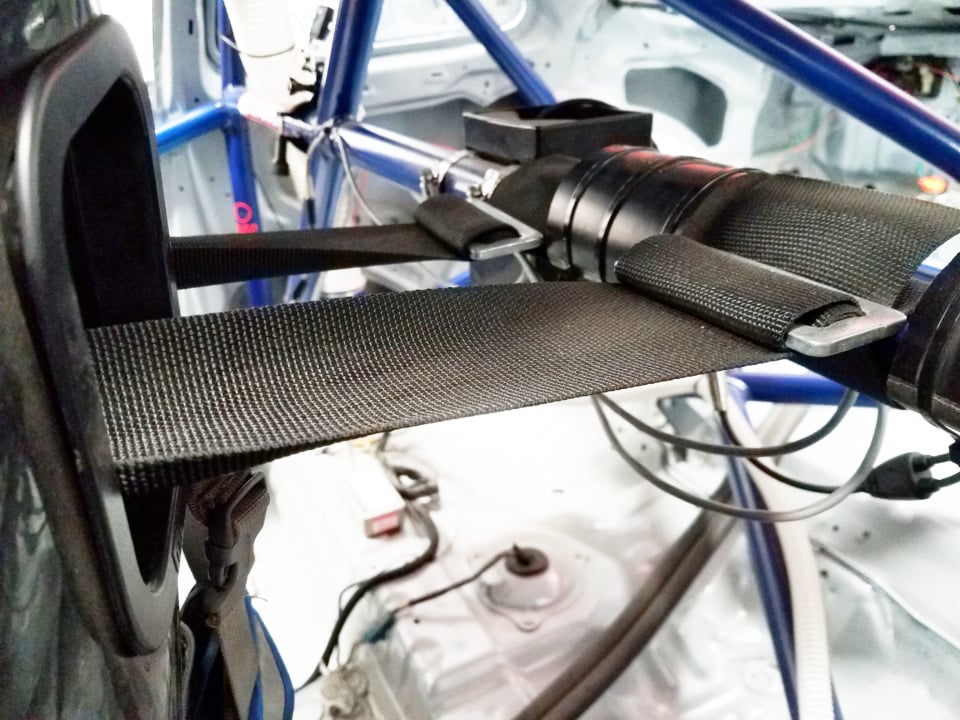
This is the correct belt path for shoulder belts (level or slightly lower than the shoulders) and most importantly the belts are not hindered past the seat. The belts are going through the seat-back holes perfectly.
To proceed the shoulder harnesses from sliding laterally on the gyre bar yous can utilise a little chip of coil bar padding to isolate the belts (similar the photograph above). If y'all desire to get fancy about information technology, y'all can install big collars that fit effectually the scroll bar that look pretty slick.
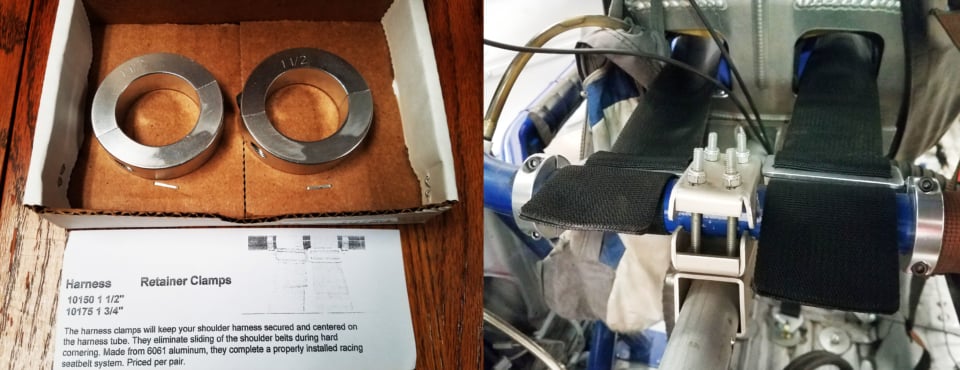
Autopower makes these lightweight aluminum collars to concur your harnesses in identify. Between the belts is a seat-back brace from I/O Port Racing Supplies. Once again, pay attention to the belt paths equally they go through the rear of the seat in the photo, perfectly aligned over the driver's shoulder and non interrupted by whatsoever function of the car.
Autopower Industries indicated later on the belts elapse in two years you could send them dorsum in to have the webbing replaced and the belts re-certified utilizing your existing hardware. This volition salve you money and keep you safe. Win-win. v-point harness installation is a worthy upgrade to any performance car as long as it is done correctly. Follow the instructions that come with the belts, improve your lap times and be safe!

Source: https://www.dragzine.com/tech-stories/chassis-safety/proper-5-point-harness-install/
Posted by: velathessalky.blogspot.com
0 Response to "How To Install Racing Harness"
Post a Comment